Reykjavík
Reykjavík, Iceland, scores 70 on the CIRA Index of tourism resilience, #57 of 309 destinations. 28 of 29 measures come from public sources, with 69% confidence. Every grade below states its value, period and source.
Scores by each organisation's criteria
- CIRA Index: 70
- OECD: 69
- UN Tourism: 63
- UNDRR: 82
Strongest
- Extreme heat days: 0 days a year at or above 35°C (last 5 full years) (ERA5 reanalysis via Open-Meteo, 2021–2025). At or below 5: grade 4/4.
- Tropical nights: 0 nights a year with a minimum at or above 20°C (last 5 full years) (ERA5 reanalysis via Open-Meteo, 2021–2025). At or below 10: grade 4/4.
- Resident support for tourism: 75 % of residents who say tourism benefits them or the city (metro figure) (City of Reykjavík / Visit Reykjavík, Maskína Survey, April 2025). At or above 70: grade 4/4.
Weakest
- Wastewater safely treated: 3 % of domestic wastewater safely treated (country figure) (Statistics Iceland (Hagstofa Íslands) / Environment Agency of Iceland, SDG Indicator 6.3.1, 2020). Below 50: grade 0/4.
- Domestic share of nights: 10.3 % of nights by residents of the same country (country figure) (Ferðamálastofa (Icelandic Tourist Board) & Statistics Iceland, Tourism in Figures, April 2025 – March 2026). Below 15: grade 0/4.
- Short-let density: 5 short-term rental listings per 100 dwellings (IMF Staff Country Reports (Selected Issues: Iceland) / Mermet (2019), 2018). Above 4: grade 0/4.
Iceland in the World Economic Forum Travel & Tourism Development Index
Iceland is #34 of 110 countries (4.4 of 7) in the WEF Travel & Tourism Development Index 2026, which scores countries, not cities. Cities in countries with that WEF score average 62 on the CIRA Index; Reykjavík is 8 above that.
Every measure, by theme
Demand and seasonality: 63
- Nights in the three busiest months: 41.7 % of annual nights (country figure) (Ferðamálastofa (Icelandic Tourist Board) / Statistics Iceland, 'Tourism in Iceland in Figures - FMS 2024-41', 2024). Between 40 and 50: grade 1/4. Source
- Domestic share of nights: 10.3 % of nights by residents of the same country (country figure) (Ferðamálastofa (Icelandic Tourist Board) & Statistics Iceland, Tourism in Figures, April 2025 – March 2026). Below 15: grade 0/4. Source
- Largest foreign market: 27.4 % of international arrivals or nights (country figure) (Statistics Iceland / Ferðamálastofa via Iceland Tourism Statistics, 2024). Between 20 and 30: grade 2/4. Source
- Recovery against 2019: 111.4 % of 2019 visitor nights reached in the latest full year (region figure) (Statistics Iceland (Hagstofa Íslands), 'Overnight stays in December 2024' & Accommodation Database SAM01102, 2024). At or above 110: grade 4/4. Source
- Average length of stay: 6.5 nights per visitor (country figure) (Ferðamálastofa (Icelandic Tourist Board) / Statistics Iceland, 'Tourism in Iceland in Figures - FMS 2024-41', Dec 2023–Nov 2024). At or above 3.5: grade 4/4. Source
- Hotel bed or room occupancy: 77 % average annual occupancy (City of Reykjavík (Reykjavíkurborg), 2023). At or above 75: grade 4/4. Source
Economy and jobs: 92
- Jobs in tourism industries: 12 % of employment in accommodation and food services (country figure) (World Economic Forum, TTDI 2026 (data: Travel & Tourism Economic Impact Research by World Travel & Tourism Council; Travel & Tourism by World Travel & Tourism Council), 2026). Between 8 and 12: grade 3/4. Source
- Unemployment rate: 4.3 % of the labour force (country figure) (Statistics Iceland, Labour market 2025, 2025). At or below 5: grade 4/4. Source
- Income per head: 83,431 GDP per capita, USD PPP (country figure) (World Bank WDI, 2025). At or above 60,000: grade 4/4. Source
- Economic diversity: not measured yet
Climate and hazards: 80
- Extreme heat days: 0 days a year at or above 35°C (last 5 full years) (ERA5 reanalysis via Open-Meteo, 2021–2025). At or below 5: grade 4/4. Source
- Tropical nights: 0 nights a year with a minimum at or above 20°C (last 5 full years) (ERA5 reanalysis via Open-Meteo, 2021–2025). At or below 10: grade 4/4. Source
- Flood hazard: medium (region figure) (World Bank GFDRR ThinkHazard, current (retrieved 2026)). Grade 2/4. Source
- Wildfire and storm hazard: medium (region figure) (World Bank GFDRR ThinkHazard, current (retrieved 2026)). Grade 2/4. Source
- Country disaster risk: 1.6 INFORM Risk index, 0–10 (country figure) (INFORM Risk (European Commission JRC), INFORM Risk Mid 2026, 2026). At or below 2: grade 4/4. Source
Water and environment: 50
- Water scarcity: very low (region figure) (World Bank GFDRR ThinkHazard, current (retrieved 2026)). Grade 4/4. Source
- Wastewater safely treated: 3 % of domestic wastewater safely treated (country figure) (Statistics Iceland (Hagstofa Íslands) / Environment Agency of Iceland, SDG Indicator 6.3.1, 2020). Below 50: grade 0/4. Source
- Municipal waste per resident: 595 kg per resident per year (country figure) (European Environment Agency / Eurostat [ENV_WASMUN], 2022). Between 550 and 700: grade 1/4. Source
- Green space: 36 % of the urban area that is green or tree-covered (Husqvarna Urban Green Space Index (HUGSI), 2023). Between 30 and 40: grade 3/4. Source
Community and housing: 56
- Tourism intensity: 11.2 visitor nights per resident per year (region figure) (Statistics Iceland (Hagstofa Íslands), 2024). Between 10 and 20: grade 2/4. Source
- Cruise pressure: not measured yet
- Rent growth: 4.2 % change in rents over the last 12 months (metro figure) (Housing and Construction Authority (HMS) / Húsgreind, Official HMS Rent-Price Index, August 2025 – August 2026). Between 3 and 6: grade 3/4. Source
- Short-let density: 5 short-term rental listings per 100 dwellings (IMF Staff Country Reports (Selected Issues: Iceland) / Mermet (2019), 2018). Above 4: grade 0/4. Source
- Resident support for tourism: 75 % of residents who say tourism benefits them or the city (metro figure) (City of Reykjavík / Visit Reykjavík, Maskína Survey, April 2025). At or above 70: grade 4/4. Source
Access and continuity: 88
- Access redundancy: 2 independent ways in: international airport, intercity rail, port, motorway (metro figure) (Associated Icelandic Ports (Faxaflóahafnir) and Isavia, 2024–2026). Between 2 and 3: grade 2/4. Source
- Air traffic recovery: not measured yet
- Rail share of intercity access: not measured yet
- Rail traffic recovery: not measured yet
- Largest airline group share: not measured yet
- Air route concentration: not measured yet
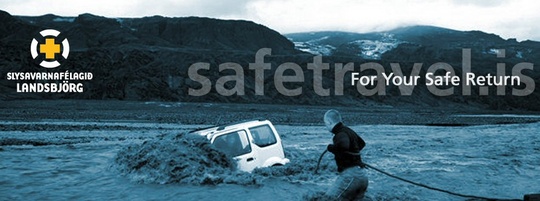
- Early warning and emergency plan: An updated, tested plan that names visitors and tourism operators, with warnings in several languages (Department of Civil Protection and Emergency Management (Almannavarnir) & Safetravel Iceland, 2024–2026). Grade 4/4. Source
- Tourism crisis and recovery plan: A plan tested in an exercise or a real event, with lessons published (Tourism Cases / CABI & Iceland Review / Almannavarnir, 2023–2024). Grade 4/4. Source
- Government effectiveness: 92.9 World Bank WGI percentile rank, 0–100 (country figure) (World Bank Worldwide Governance Indicators, 2025). At or above 80: grade 4/4. Source
- Travel advisory: 1 stricter of the US and Canadian government advisory for the country, 1 (normal precautions) to 4 (do not travel) (country figure) (US State Department and Government of Canada travel advisories, 2026-09-29). At or below 1: grade 4/4. Source
- Dedicated tourism funding: A dedicated source partly ring-fenced for residents, infrastructure or sustainability (Icelandic Tourist Board (Ferðamálastofa) / Ministry of Culture and Business Affairs, 2024–2026). Grade 3/4. Source
Compare Reykjavík
The CIRA Index ranking · City vs city · How the index works · CIRA Studio · Put your city in the pilot